
Had a Life Change? You May Qualify for a Special Enrollment Period
If you’ve recently lost job-based health coverage, moved, or had some other change in your situation, you may be worried that you’ve missed your chance to sign up for Medicare or change your coverage. In many cases, that’s not true. Medicare has a separate set of enrollment windows, called Special Enrollment Periods, built specifically for situations like these.
We’ll walk through what a Special Enrollment Period is, what kinds of life changes typically qualify, roughly how much time you have to act, and how this window is different from the enrollment periods you may have heard about elsewhere.
What Is a Medicare Special Enrollment Period?
A Medicare Special Enrollment Period is a window that opens outside the standard enrollment periods when a specific qualifying life event happens — things like losing job-based coverage or moving out of your plan’s service area. It’s separate from the Initial Enrollment Period tied to turning 65 and from the annual Open Enrollment window, and timing depends on which event triggered it. It doesn’t lock you into a specific plan — it simply opens the door to enroll or make changes to your coverage.
What Can a Special Enrollment Period Let You Do?
An SEP is not one universal extension with the same choices and deadline for everyone. Depending on the qualifying event, it may let you sign up for Medicare after delaying enrollment because of current employer coverage, or join, switch, or drop Medicare Advantage or prescription drug coverage. The changes you can make and the time available depend on what triggered your SEP, which is why it is important to confirm the rules for your specific situation. Medicare’s Special Enrollment Period guidance lists the options and timing for different life events.
What Qualifies You for a Special Enrollment Period?
Special Enrollment Period eligibility is tied to specific, real changes in your situation — not something you can request just because you’d like more time. Common qualifying events include:
- Losing job-based or union group health coverage, whether from retirement, a layoff, or your employer ending the plan
- Moving out of the area your current plan serves
- Losing other creditable health coverage you were relying on
- Your current plan making a significant change, such as reducing its network, receiving a low quality rating, or closing altogether
- Moving into or out of a nursing home or other care facility
This is a general overview of the most common categories, not a complete list of every possible qualifying event, and every situation is a little different. What these events have in common is that something changed outside your control — your coverage, your address, or your plan itself — which is why Medicare treats them differently from someone simply deciding they’d like a new plan. If something has changed in your life and you’re not sure whether it counts, that’s exactly the kind of question worth asking before you assume either way.
Not ready to book a full consultation but have a question first? Talk with a local Medicare advisor.
How Long Do You Have to Enroll?
The exact length of your Special Enrollment Period depends on which qualifying event applies to you, and the rules can change from one plan year to the next. Some situations open a shorter window measured in weeks after the event; others, like losing employer coverage before you’ve ever signed up for Medicare, can allow several months to get enrolled. Because the timing varies so much depending on the specific trigger, it’s worth confirming your own window rather than assuming a general rule applies to your situation. These windows are set periods, not open-ended, so it helps to get a clear answer on your own timeline sooner rather than later.
Medicare publishes an event-by-event Special Enrollment Period guide showing what changes are allowed and when each window applies.
Special Enrollment vs. Initial Enrollment vs. Open Enrollment — What’s the Difference?
It’s easy to mix these up, since they all involve signing up for or changing Medicare coverage, but they serve different purposes:
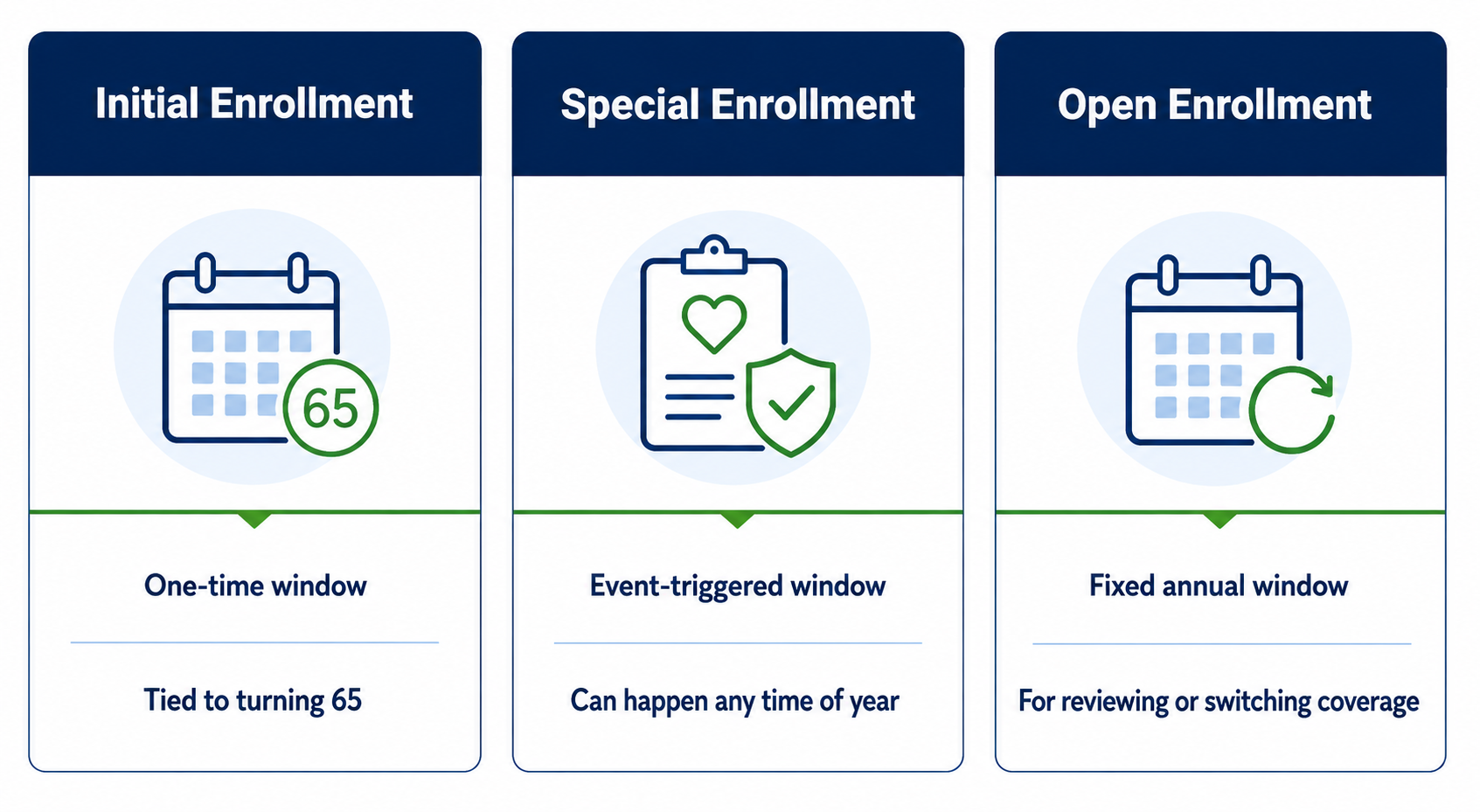
- Your Initial Enrollment Period is the one-time, 7-month window built around your 65th birthday, when most people first become eligible for Medicare.
- Open Enrollment is a fixed window every year when people already on Medicare can review and switch their coverage, whether or not anything in their situation has changed.
- A Special Enrollment Period is different from both — it isn’t tied to your birthday or a set calendar date. It opens because of a specific qualifying event, and it can happen at any time of year.
If your situation involves stepping away from an employer plan specifically, here’s a closer look at what that path involves.
Losing Employer Coverage? What to Know
Losing job-based or union coverage — whether because of retirement, a layoff, or a spouse’s coverage ending — is one of the most common reasons people qualify for a Special Enrollment Period. Losing that coverage typically opens the window, but it doesn’t enroll you in anything by itself — you still need to actively sign up within your window, the same way you would during any other enrollment period. It’s a big enough topic on its own, with its own set of considerations depending on how your prior coverage worked, that we cover it in more detail as its own conversation. If this is your situation, it’s worth starting there so nothing about your specific timeline gets missed.
For Part A and Part B timing after active employer coverage, review the Social Security Administration’s Medicare sign-up guidance. COBRA and retiree coverage do not always work the same way as coverage based on current employment, so confirm your circumstances before delaying enrollment.