
Which Medicare Plan Is Right for You?
Choosing between Medicare Advantage, Medicare Supplement, and Part D can feel like a lot to sort out at once — especially when every plan claims to be the right one. The truth is, there’s no single best option. The right fit depends on your doctors, your prescriptions, your budget, and how you like to handle your health care day to day.
Most people land on one of two general paths: Medicare Advantage, which bundles everything into one plan, or Original Medicare paired with a Medicare Supplement policy for broader flexibility. Prescription drug coverage, through Part D, fits into that decision differently depending on which path you take. None of this has to be decided in a single sitting — understanding the tradeoffs first is what actually makes the choice easier.
This page walks through the practical differences between the three main paths, what to weigh as you decide, and when it might help to talk it through with someone local.
Is Medicare Advantage or Original Medicare Better for Me?
No option is best for everyone. Medicare Advantage typically uses provider networks and often includes extra benefits. Original Medicare offers broader provider flexibility and can be paired with Medicare Supplement and Part D coverage. The better fit depends on your doctors, prescriptions, budget, and how much flexibility you want.
Medicare Advantage vs. Medicare Supplement: The Core Difference
Medicare Advantage (sometimes called Part C) bundles your Part A and Part B coverage into a single plan, often with extra benefits like dental, vision, or hearing built in. Many Medicare Advantage plans keep your monthly premium low, but they typically work through a network — so your choice of doctors and specialists may be more limited than it would be with Original Medicare.
Medicare Supplement, also called Medigap, works differently. It’s coverage you add on top of Original Medicare to help pay costs Original Medicare doesn’t cover, like deductibles and copays. Medicare Supplement plans usually come with a higher monthly premium, but they generally give you more flexibility to see any doctor who accepts Medicare, without needing a referral or staying in-network.
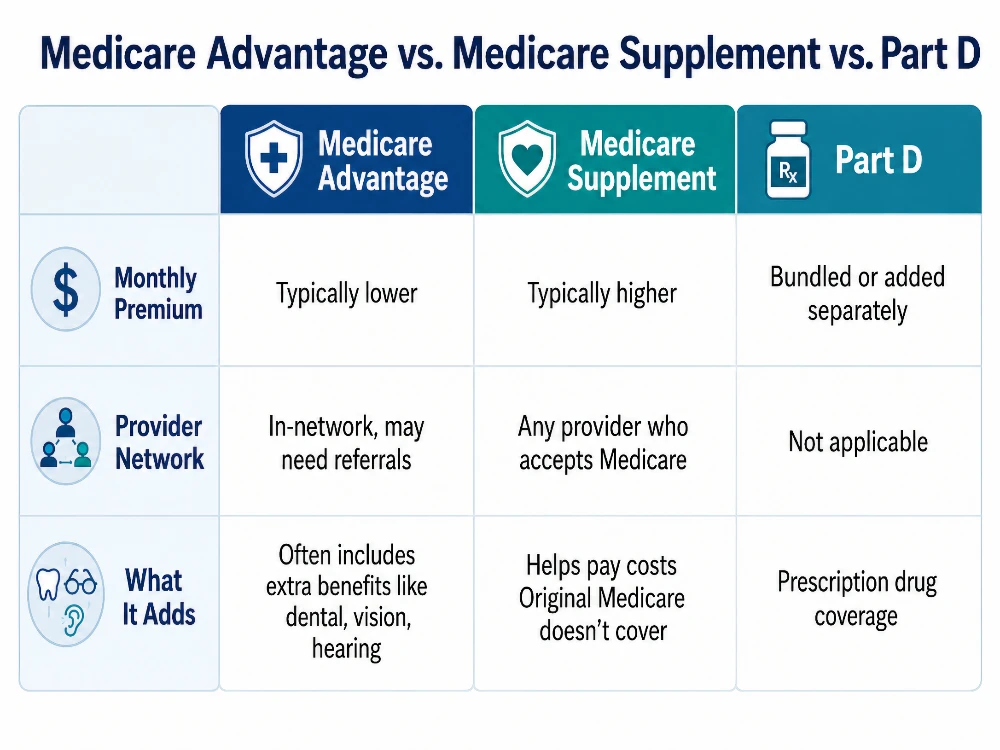
Neither path is right or wrong — it depends on what matters more to you: a lower monthly cost and built-in extras, or broader flexibility with your providers.
Where Part D Fits In
Prescription drug coverage works differently depending on which path you’re on. If you choose Medicare Advantage, many plans already include Part D drug coverage built in. If you choose Medicare Supplement instead, Part D isn’t included — you’d add a separate Part D plan to cover your prescriptions.
Either way, the plan’s drug list, called a formulary, matters as much as the premium. A plan can look affordable until you check whether it actually covers what your pharmacy fills for you.
Not ready for a full consultation but have a quick question about how this works for your situation? Talk with a local Medicare advisor.
Choosing Based on Your Doctors and Provider Network
If you have doctors or specialists you want to keep seeing, it’s worth checking how each path handles provider networks before you decide. Medicare Advantage plans generally require you to use in-network providers, and some services may need a referral. Medicare Supplement plans, paired with Original Medicare, generally let you see any provider who accepts Medicare, which can matter if you split time between Knoxville and elsewhere or see specialists outside a typical network.
Checking your specific doctors against a plan’s network — rather than assuming coverage — is one of the most useful things you can do before choosing.
Choosing Based on Budget and Total Cost
Monthly premium is only part of the picture. A plan with a low premium can still cost more overall once you add up deductibles, copays, and out-of-pocket costs for the care you actually use. Medicare Advantage often has a lower monthly premium and includes an annual out-of-pocket maximum, which can offer more predictability for some budgets. Medicare Supplement plans usually cost more each month, but tend to leave fewer surprise bills once you’ve paid your premium.
Which path costs less overall really comes down to how much care you use in a given year and how you’d rather pay for it — a little more every month, or less monthly with more variability depending on what comes up.
Choosing Based on Travel Needs
If you travel often, split time between homes, or see specialists outside East Tennessee, that’s worth factoring in early. Medicare Advantage plans are typically built around a local or regional network, so coverage away from home may be limited to emergency care. Medicare Supplement plans, since they work alongside Original Medicare, generally travel with you to any provider nationwide who accepts Medicare.
If your specialists or family are outside Knox County, or you spend part of the year elsewhere, that flexibility can matter more than the monthly premium difference.