
If you already have Medicare, you may not think much about it once you’re enrolled — but your coverage isn’t something you set once and forget. Each year, Medicare gives you a window to review your plan and make changes if something no longer fits. You’re not required to do anything, but it’s worth knowing when that window is and what it lets you do.
We’ll walk through when the Annual Enrollment Period happens, how it’s different from the shorter Medicare Advantage Open Enrollment Period that follows it, why a yearly check-in matters even if nothing feels wrong, and what to actually look at when you review your coverage.
When Is Medicare Open Enrollment?
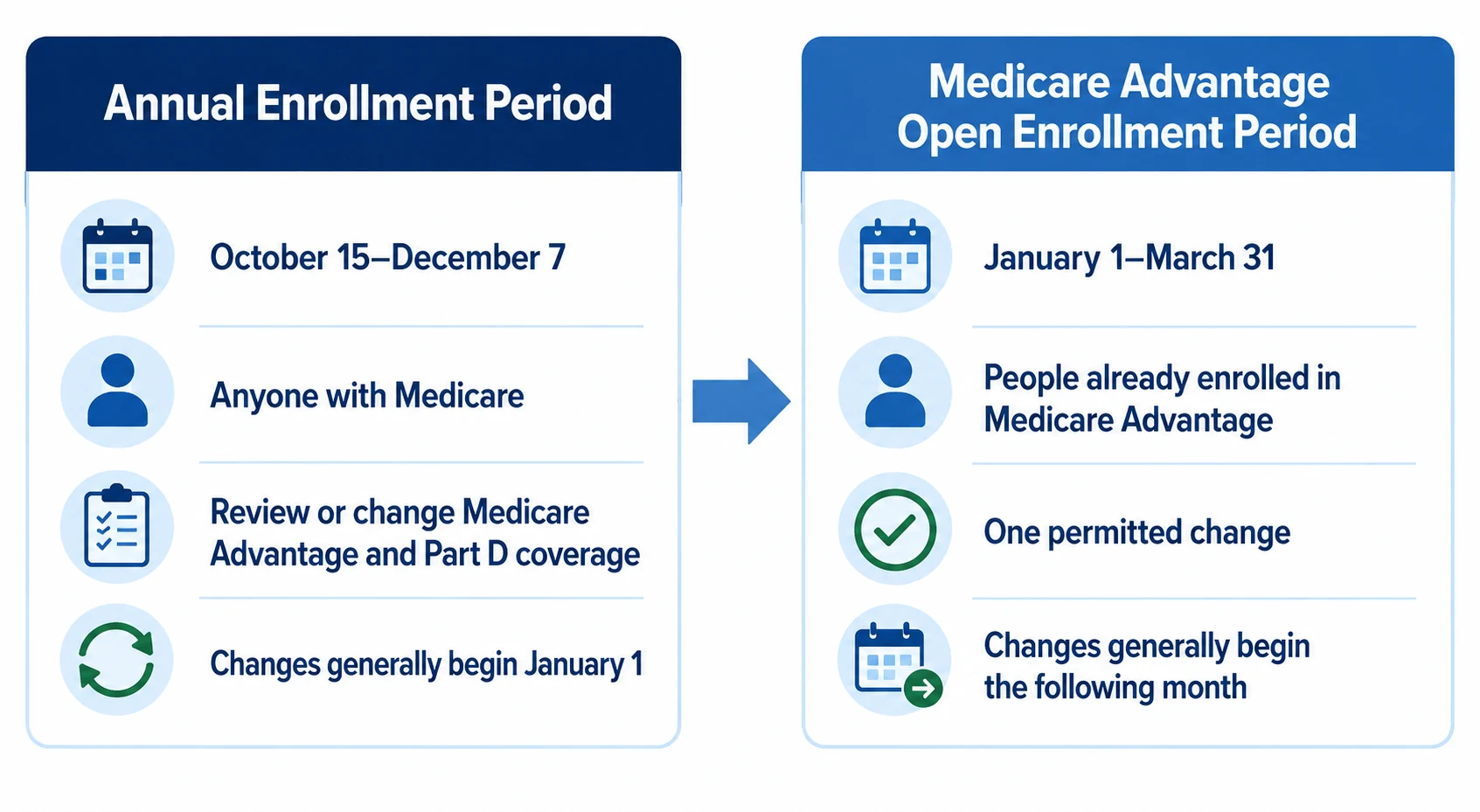
Medicare has two annual windows for reviewing coverage, and they serve different people. From October 15 through December 7, anyone with Medicare can review and change coverage for the next year. From January 1 through March 31, people already enrolled in Medicare Advantage have a narrower opportunity to make one plan change. Neither period requires you to switch; the goal is to confirm that your costs, doctors, prescriptions, and coverage still fit.
What Is the Medicare Annual Enrollment Period?
The Medicare Annual Enrollment Period, often called AEP, runs every year from October 15 through December 7. It’s open to anyone with Medicare, not just people who are already thinking about switching. During this window, you can join, switch, or drop coverage — moving from Original Medicare to a Medicare Advantage plan, from Medicare Advantage back to Original Medicare, from one Medicare Advantage plan to another, or joining, switching, or dropping a Medicare drug plan. Any changes you make take effect January 1 of the following year. Medicare’s plan-enrollment guidance provides the complete list of permitted changes.
You can make more than one change during this window if you need to — it’s whatever you submit by December 7 that ends up taking effect. And if your current plan still meets your needs and is still being offered, you don’t have to do anything at all. Staying put is a perfectly reasonable choice, not something you need to justify.
What’s Different About the Medicare Advantage Open Enrollment Period?
If you’re already enrolled in a Medicare Advantage plan, there’s a second, separate window that follows AEP — the Medicare Advantage Open Enrollment Period, often shortened to MA OEP, running January 1 through March 31 each year. It works differently in a few ways:
- It’s only available if you’re already in a Medicare Advantage plan — it doesn’t apply if you’re on Original Medicare or already have a standalone drug plan
- You’re limited to one change during this window, rather than the multiple changes AEP allows
- Your choices are narrower too — you can switch to a different Medicare Advantage plan, or return to Original Medicare and add a standalone drug plan
Because these two windows sit back-to-back but work by different rules, it’s easy to mix them up. If you’re already in a Medicare Advantage plan and want to revisit your coverage, this second window may allow one additional change — not a second chance to do the exact same thing again. An allowed change generally takes effect on the first day of the month after the plan receives the request. Medicare’s enrollment-period guide explains these limits in more detail.
Why Review Your Medicare Coverage Every Year?
You may assume that if nothing has changed in your health, there’s no reason to look at your coverage again. But plans themselves change from year to year, even when your situation hasn’t. Premiums can shift, provider networks can change, and drug coverage lists can be updated — all without you doing anything. A plan that made sense last year may not still be the right fit going into the next one.
That’s really the point of having this window every year — not that you need to switch, but that you have a real chance to check. If you go through your review and everything still looks right, that’s a completely valid outcome. You’re not expected to make a change just because the window is open — the goal is simply to know where you stand before the year starts, rather than finding out partway through that something no longer fits.
What to Look at When You Review Your Plan
A yearly review doesn’t have to be complicated. At a high level, it’s worth checking:
- Your premium and any other costs, and whether they’ve changed for the coming year
- Whether your doctors and preferred providers are still in your plan’s network
- Whether your prescriptions are still covered, and at what cost
- Your plan’s current rating and any notices about changes to how it’s run
Each of these deserves its own closer look depending on your situation, but checking all four gives you a general sense of whether your coverage still fits. None of them require you to become an expert overnight — the point of a review is just to notice if something has shifted, not to work through every detail alone.