
Turning 65 Soon? Here’s What You Need to Know About Medicare
If you’re getting close to 65 — or you just turned 65 — you may be wondering when you’re actually supposed to sign up for Medicare, and what happens if you get the timing wrong. It’s a fair question. Medicare’s enrollment rules aren’t always explained clearly, and a missed deadline can mean a penalty that sticks with your premium for as long as you have that coverage.
The good news: for most people, the timing is more straightforward than it looks. We’ll walk through when your window opens and closes, whether you need to do anything at all, how to actually sign up, and what to watch out for so you don’t get caught off guard.
What Is the Medicare Initial Enrollment Period?
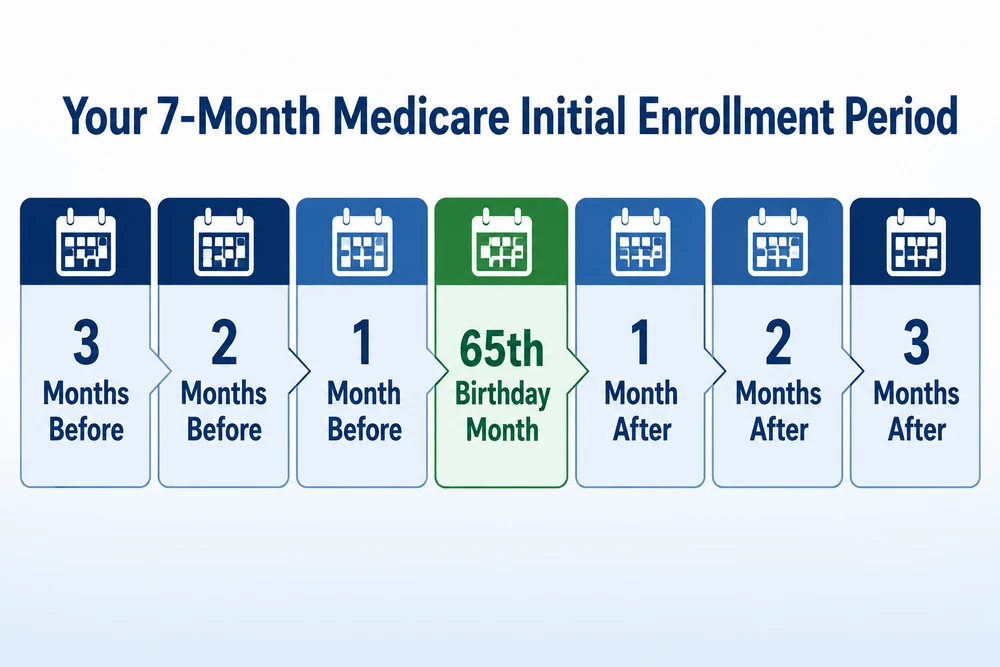
The Medicare Initial Enrollment Period is a 7-month window centered on your 65th birthday — 3 months before your birthday month, the birthday month itself, and 3 months after. Missing it without qualifying job-based group coverage can trigger a lasting Part B or Part D late-enrollment penalty. Enrollment is handled through Social Security, not Medicare directly, and signing up on time doesn’t lock you into one type of coverage — you still choose your plan afterward.
How Does the Seven-Month Enrollment Window Work?
Your enrollment date can affect when your Medicare coverage begins, so the timing within this window matters. There is also an important exception for people born on the first day of a month: Medicare generally treats the previous month as the birthday month for enrollment timing. Medicare’s coverage-start guidance can help you match your enrollment date to the expected effective date.
If you sign up before your birthday month, your coverage typically starts the first day of your birthday month. If your birthday is on the first day of the month, coverage generally starts the first day of the previous month. Sign up during your birthday month or in the 3 months after, and coverage generally starts the next month.
Do You Need to Sign Up, or Are You Already Enrolled?
This depends on your eligibility status and where you are with Social Security.
- If you’re already receiving Social Security or Railroad Retirement benefits when you turn 65, you’re typically enrolled in Medicare Part A and Part B automatically. Your Medicare card should arrive on its own — you usually don’t need to submit a separate application.
- If you haven’t started Social Security benefits yet, you’ll generally need to actively sign up for Medicare yourself. It doesn’t happen automatically just because you turned 65.
If you’re still working and covered under a group health plan based on your or your spouse’s current employment, the rules can work differently. Medicare provides separate guidance for people working past 65, and it’s worth confirming how the rules apply to you rather than guessing.
How to Enroll in Medicare
Enrolling in Medicare Part A and Part B is handled through the Social Security Administration, not through Medicare directly. If you’d like help understanding your timing and coverage choices before you apply, schedule a consultation with Chris. When you’re ready to apply, Social Security offers a few ways to do it:
- Online through the Social Security Administration’s website
- By phone with Social Security
- In person at your local Social Security office
You’ll want to have some basic information ready — things like your birth date, Social Security number, and details about any current health coverage. If you’re not sure whether you should sign up now or wait, that’s exactly the kind of question worth talking through before you submit anything.
What Happens If You Miss Your Enrollment Window
If your Initial Enrollment Period passes and you didn’t have job-based group coverage that qualifies you for a Special Enrollment Period, you’ll generally need to wait for the next enrollment opportunity to sign up — and you may face a late enrollment penalty going forward.
For Part B, the late enrollment penalty typically adds 10% to your monthly premium for each full 12-month period you were eligible but didn’t enroll, and it’s usually added to your premium for as long as you have Part B. Part D has its own separate late enrollment penalty. It may apply if you go 63 days or more in a row without Medicare drug coverage or other creditable prescription drug coverage; the longer you go without qualifying coverage, the more it can add to your monthly cost for as long as you have Medicare drug coverage.
If you qualify for a Special Enrollment Period — such as after losing group health coverage based on current employment — different timing rules may apply. That’s a distinct situation from the Initial Enrollment Period, and it’s worth confirming which enrollment period actually applies to you rather than assuming.
Not ready to book a full consultation but have a question first? Talk with a local Medicare advisor.
Keeping Your Enrollment Documentation
Once you’ve enrolled, it’s worth holding onto whatever paperwork confirms your coverage history — including any Notice of Creditable Coverage from a past employer plan, if you have one. It’s simple to overlook in the moment, but it can matter later if a question ever comes up about your enrollment timing. If you’re not sure what you have or what to keep, we’re happy to help you sort through it.
Choosing Your Coverage Once You’re Enrolled
Signing up for Medicare Part A and Part B is just the first step — it doesn’t lock you into one type of coverage. From there, you’ll generally choose between staying on Original Medicare, adding a Medicare Supplement plan alongside it, or enrolling in a Medicare Advantage plan instead. You’ll also want to think about prescription drug coverage through Part D, whether as its own plan or bundled into an Advantage plan. Medicare’s overview of coverage options provides a useful starting point.
Which path makes the most sense depends on your doctors, prescriptions, budget, and how you prefer to receive care. That’s a decision worth comparing carefully rather than guessing at — and not one you need to make alone.